Prologue
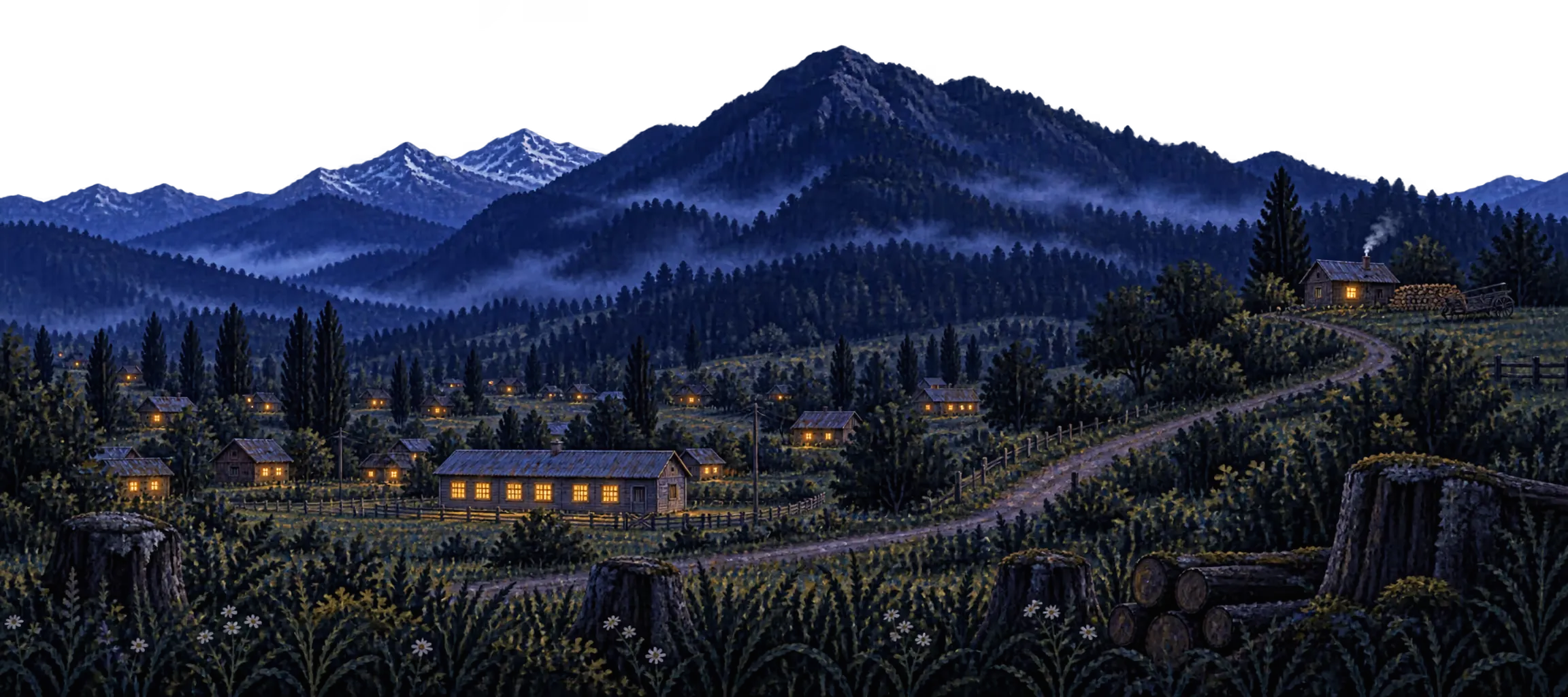
They say this story happened in a little village tucked at the foot of a mountain, where the air smells of freshly cut firewood and the mornings dawn wrapped in mist.
It is the story of three little sisters who learned very early that there are wounds nobody can see, yet they hurt just the same. And they also learned something far more difficult: that the bravest way to answer contempt is not with more contempt, but with an open heart.
Chapter 1: The House by the Mountain
In that little village, up along the road, stood a simple house of wooden boards with a tin roof. There lived José, the father; Sonia, the mother; and their three ten-year-old daughters, who were triplets: Marisol, Luz and Clara.
They were a very cheerful, very happy family, in spite of being poor. Money was always scarce in that house, but the table was never bare, laughter never left the kitchen, and no one ever went to bed without a hug.
The three girls were delightful. They had the same dark, lively eyes, and although they looked so alike that the neighbors sometimes mixed them up, each one had her own character. Marisol was the most serious and observant. Luz was talkative, joyful, incapable of keeping a secret for very long. And Clarita, the youngest by a few minutes, was the most tender and also the firmest whenever something struck her as unfair.
All three were excellent students. They studied by the light of a yellowish bulb, their notebooks propped on the dining table, while their mother mended clothes beside them.
Every day, very early, their father went down to the city to sell firewood. He loaded it onto his old cart and delivered it to the bakeries, the corner shops and the private homes getting ready for winter. And he took advantage of the trip to bring his daughters to school.
—Behave yourselves, my girls —he would say as he saw them off—. And learn a great deal, because study is the only inheritance I can leave you.
—Yes, Papa —the three would answer in chorus, kissing his rough cheek.
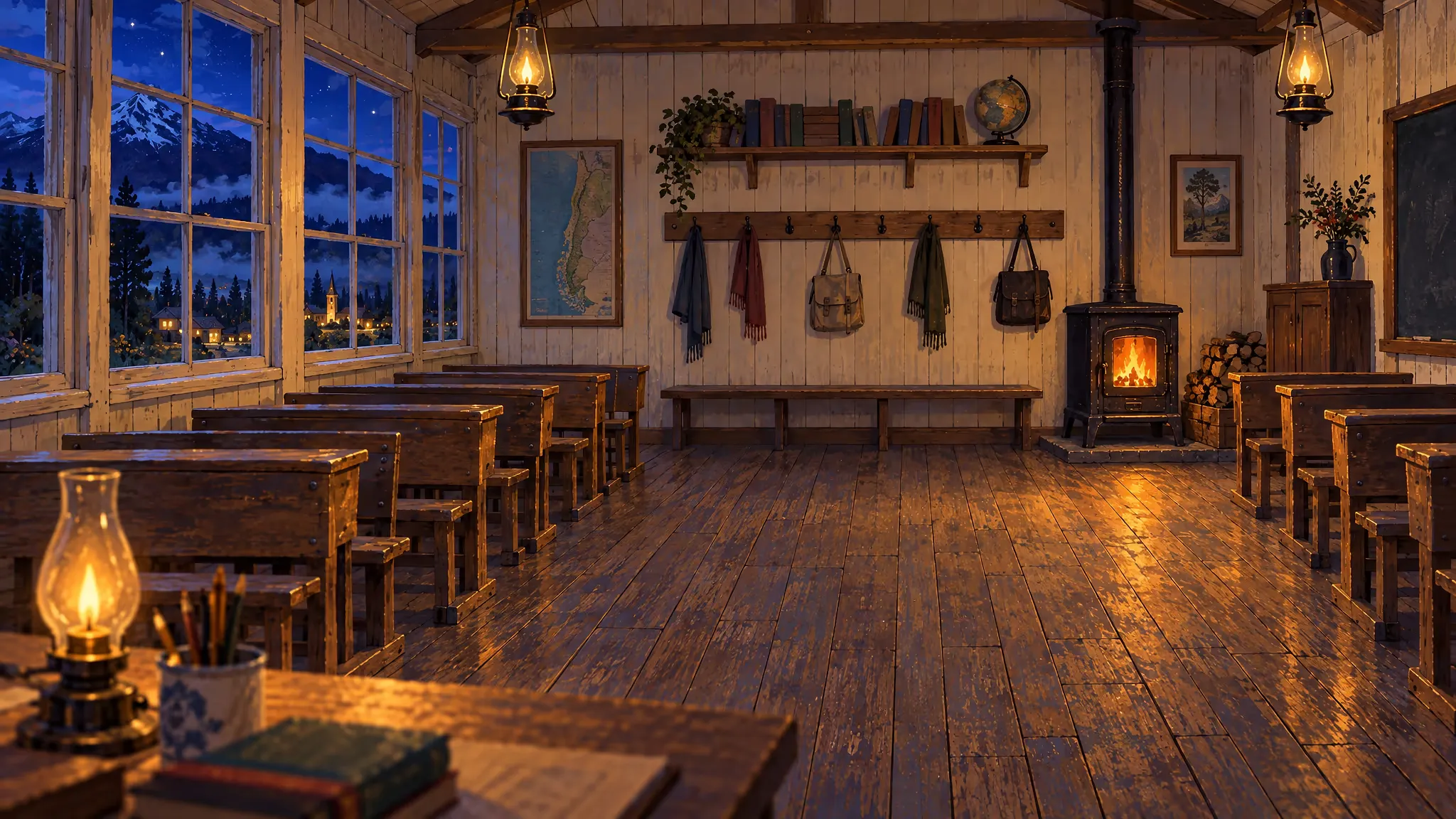
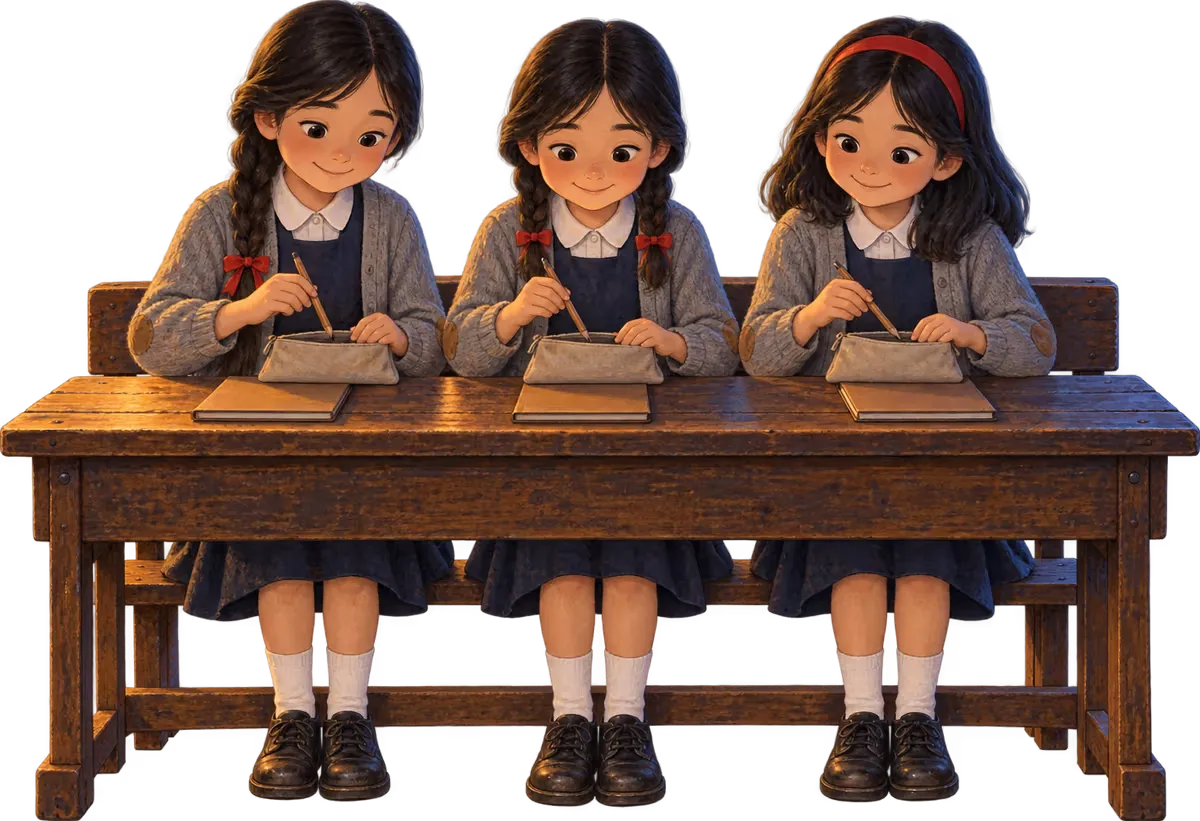
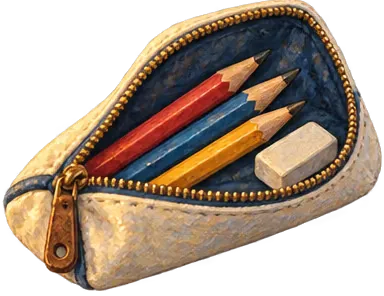
When they reached their classroom, the little sisters greeted their teachers, their friends and their classmates very politely. They sat together in the second row and took out their supplies carefully, because they knew what every pencil cost.
Everything seemed perfect. But inside that same classroom there was a group of girls who looked at them quite differently.
Chapter 2: The Nickname
There were three of them: Paula, Lorena and Angélica.
Nobody ever knew for certain where it began. Perhaps it was envy over the good grades. Perhaps it was jealousy because the three sisters always had one another. Perhaps it was simply easier to mock than to ask.
One day, as the sisters walked into the classroom, Angélica said out loud:
—Here come the woodcutter girls.
The others laughed. And the nickname stuck like resin on your hands.
From then on, there was not a single peaceful day. If someone lost a pencil, they said the woodcutter girls had taken it. If the sisters did well on a test, they insisted the girls had cheated. If they arrived with their shoes stained by mud from the mountain road, they wrinkled their noses and said the girls were dirty.
And the worst of all came one morning in May. Lorena hid her own pencil case inside her backpack and then, with fake tears, announced that it had been stolen.
—I saw Clara near my desk —said Angélica, staring at the floor with false shyness.
Clarita felt the blood drain from her face. She stood up, her hands trembling.
—I didn’t take anything —she said, and her voice came out small, but firm—. I have never taken anything that isn’t mine.
Nobody formally accused her that day. But the word “thieves” was left floating in the air, and that word weighs a great deal on the shoulders of a ten-year-old girl.
At recess, the three sisters sat together at the back of the yard, under an acacia tree.
—Why are they doing this to us? —asked Luz, her eyes full of tears—. We’ve never hurt anybody.
Marisol put an arm around her shoulders.
—I don’t know —she answered—. But we know who we are. That’s what matters.
Clarita sat looking at the mountain, far away, where their house stood.
—Let’s not tell Papa or Mama anything —she said suddenly.
—Why not? —asked Luz.
—Because it will make them sad. Papa gets up at five in the morning to bring us here. Mama stays up late sewing so our uniforms are clean. If we tell them this, they’ll suffer over something they can’t fix.
The three fell silent. And so, without ever saying it in so many words, they made a pact.
Chapter 3: The Sisters’ Secret
At dismissal time, their father was waiting at the corner beside his now-empty cart, his hands dirty with soil and bark and his smile the cleanest in the world.
—My girls! How did it go today?
And the three, who minutes earlier had dried their tears in the school bathroom, hid it so well that not even the sharpest eye would have noticed.
—Very well, Papa! —Luz would say—. We got good grades in math.
—Miss Claudia said my composition was the best in the class —Marisol would add.
José walked between the three of them, proud as a king, telling them who he had sold firewood to that day and how much they had saved up for winter.
But at night, when the house fell quiet and all you could hear was the wind coming down off the mountain, the sisters talked in low voices from their beds.
—Do you think they’ll ever get tired of bothering us? —Luz would ask.
—Someday —Marisol would answer.
—And what if they never do? —Clarita would insist.
—Then we’ll still be all right —Marisol would say—, because there are three of us.
What the sisters did not know was that, at school, someone had begun to watch very closely.
Chapter 4: The Teachers’ Eyes
In the staff room, the subject had come up more than once.
—It doesn’t add up for me —said Miss Claudia, the head teacher, stirring her tea—. Those three girls are among the most polite students I’ve ever had. And suddenly it turns out they cheat, they steal, they’re dirty. It doesn’t add up.
—Not for me either —replied the physical education teacher—. But the accusations always come from the same group.
—Then let’s do something better than guessing —said Miss Claudia—. Let’s watch.
And that is what they did.
For several weeks the teachers paid discreet but constant attention. During tests, Miss Claudia positioned herself where she could see the sisters’ desks without their noticing. And what she saw was always the same: three girls bent over their papers, chewing their pencils, never lifting their eyes.
When an eraser disappeared, the teacher asked nothing in front of the class. She simply waited. And the next day she saw the “lost” eraser peeking out of the pocket of Paula’s smock.
When someone said once more that “the woodcutter girls were dirty”, Miss Claudia truly looked: the sisters’ uniforms were worn, yes, patched at the elbows, yes, but spotlessly clean and pressed. Someone cared for them with enormous love.
One afternoon the teacher stayed behind alone in the classroom, grading tests. When she came to Clarita’s, she found in the margin, written in tiny letters, a message the girl had forgotten to erase:
“I don’t cheat. I study.”
Miss Claudia sat a long while with that sheet of paper in her hand. Then she dried her eyes, put the tests away, and made a decision.
Chapter 5: The Class Meeting
The following Friday, Miss Claudia announced that they would hold a class meeting.
She shut the door, set the chalk down on her desk, and sat on the edge of the table facing her students.
—Today we are not going to talk about grades —she said—. Today we are going to talk about something far more important: how we treat one another.
The classroom went absolutely silent.
She spoke first about respect. She spoke about how in that class there were children who walked half an hour to get there and others who arrived by car, and that this made none of them better than the rest. She spoke about words said as jokes that lodge themselves like splinters.
Then she looked up.
—Paula, Lorena, Angélica. Come to the front, please.
The three stood up slowly and walked to the blackboard with their eyes down.
—I want to ask you one single question —said the teacher, in a calm but very serious voice—. Why have you been accusing your classmates all this time?
Not one of them answered.
—I ask because we, the teachers, have been observing for weeks. And we know, with certainty, that nothing you said was true. Not one single thing.
A murmur ran through the room.
—Accusing someone of something they didn’t do is not mischief —Miss Claudia continued—. It is an injustice. And this is going to have a very serious consequence.
Then something happened that nobody expected.
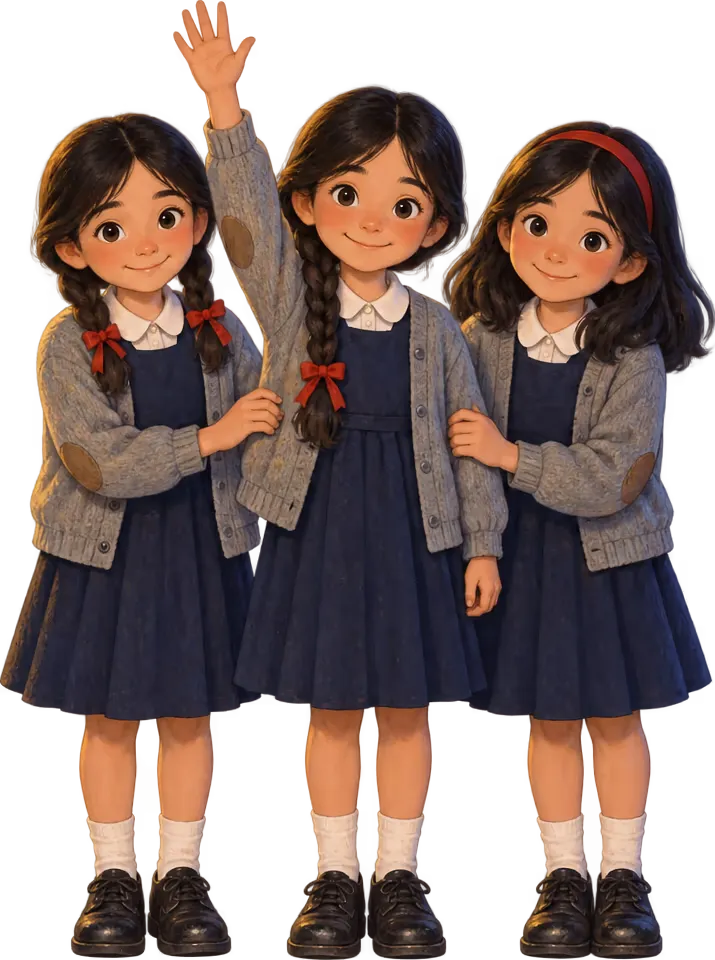
Marisol raised her hand. She stood up, and her two sisters stood up with her.
—Miss —she said—, please don’t worry. We forgive them.
The teacher looked at them, deeply moved.
—My girls —she answered gently—, I am enormously grateful for what you have just done. You have every right to forgive, and that is a very great gesture. But forgiving does not make the wrong disappear. They have to learn too.
The three accused girls kept their heads bowed, red with shame, unable to look at anyone.
—Tomorrow I want your mothers here at the school —Miss Claudia concluded, handing each of them a summons—. You may return to your seats.
Paula, Lorena and Angélica walked back. And as they passed the sisters, they did not look at them with regret, but with resentment.
Chapter 6: The Summons and the Threat
The next day the three sisters arrived as always, cheerful, greeting their friends and their teachers.
At the school gate, meanwhile, Paula, Lorena and Angélica were arriving in silence, each one beside her mother.
Miss Claudia showed them into the office, where Mrs. Cristina, the principal, was also waiting. There she told them, calmly and without exaggerating a thing, everything that had happened during the year: the nickname, the mockery, the accusations of cheating, the word “thieves”.
The three mothers listened, bewildered.
—Is that true, Lorena? —asked one of them, her voice trembling with disappointment.
Lorena did not know what to answer. None of the three did.
—I taught them something different at home —said Paula’s mother, her eyes wet—. I really did teach them something different.
The mothers apologized to Miss Claudia and to the principal.
—We are discussing this at home —Angélica’s mother told her daughter—. Very seriously.
When the mothers had left, the three girls walked toward the classroom. As they went in, they looked at the sisters with scorn, as though the whole problem had been theirs.
At recess, Marisol, Luz and Clarita were playing ring-around-the-rosy with their friends. In the middle of the game, Clarita stepped away for a moment to get a drink at the fountain.
Angélica was waiting for her.
—It’s your fault our mothers got called in —she said, coming very close—. After school we’ll be waiting for you outside. All three of us. And you’re going to pay for the bad time you gave us.
Clarita felt her heart pounding in her chest. But she did not step back and she did not cry. She stood looking her in the eye for a few seconds, in silence, with a calm that threw Angélica completely off balance.
Then she turned around and walked quietly back to play with her classmates.
Angélica was furious. She had prepared those words to frighten her, and the girl from the mountain simply had not played along.
The bell rang. They went back to the classroom for the last lesson of the day, and Clarita paid more attention than ever, because her father always told her that the best answer to someone else’s anger is to do your own work well.
At dismissal, the three sisters met their father at the usual corner. Clarita looked toward the gate, toward the sidewalk, toward the corner. There was no one waiting for her.
And she understood something important: that threat had never been real. It was only noise.
Chapter 7: Sonia’s Conversation
Weeks later, Miss Claudia called all the parents of the class to a meeting to discuss each child’s academic progress.
Sonia arrived wearing her good shawl, the one she saved for important occasions. She listened to everything attentively, writing test dates in a little notebook.
When the meeting ended and the other parents were leaving, the teacher came over to her.
—Sonia, could you stay a moment? I need to speak with you.
Sonia’s stomach tightened. She immediately thought the worst: that her daughters had misbehaved, that they were in trouble, that something had happened.
—Don’t worry —Miss Claudia said, seeing her face—. It’s quite the opposite. Your daughters are a great example for this class. They are excellent students, polite and respectful. I tell you that from the heart.
—Then… what is it? —Sonia asked.
The teacher took a deep breath.
—What is happening is that a group of girls, whether out of envy or jealousy I couldn’t say, has been tormenting them all year. They called them “the woodcutter girls” to mock them. They accused them of cheating on tests and even of stealing. We investigated and confirmed that all of it was a lie. Measures have been taken and their mothers have been called in.
Sonia sat very still. Then she spoke, very slowly:
—I had no idea. Not once did they say a word to me. Every day they come home laughing, telling me things about school…
—Your daughters have been protecting you —said Miss Claudia kindly—. That, too, says a great deal about how you raised them.
That afternoon, in the house by the mountain, Sonia waited until her daughters had finished their tea. Then she sat down facing them.
—I need you to tell me what has been happening at school —she said—. And I need you to tell me all of it.
The three looked at one another. Luz was the first to burst into tears, and the other two broke down right behind her. It all came out: the nickname, the laughter, the hidden pencil case, the word “thieves”, the mornings when they didn’t want to get up.
Sonia hugged all three at once, the way she had when they were babies.
—And why didn’t you tell me anything, my girls?
—Mama —Marisol answered, her voice breaking—, we didn’t want to worry you. Not you and not Papa.
Sonia took their faces in her hands.
—Listen to me carefully. You are brave, good girls, and I am very proud of all three of you. But there is something I want you to learn today: carrying sorrow alone doesn’t make you stronger, it only makes you lonelier. Next time, anything at all, however small, you tell me right away. Do you promise?
—We promise —said the three.
That night, José heard the whole story beside the fire. He said almost nothing. He only stared into the flames for a long while. Then he got up, went into his daughters’ room and kissed each of them on the forehead, believing them asleep.
—You are worth gold —he whispered—. Let nobody tell you otherwise.
Chapter 8: The Trip to the Park
Spring arrived, and with it, good news. Miss Claudia announced that on Friday they would take a trip to a nearby park.
—I need two things —she explained—. First, a permission slip signed by your parents. And second, a snack to share. Remember that word: share.
Friday dawned clear. The park was full of sunshine, freshly cut grass and the shouts of running children. At midday the teacher called everyone for lunch, and each child took out what they had brought.
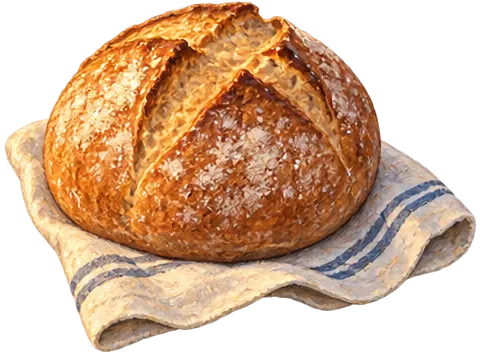
Marisol, Luz and Clarita had brought what their mother had been able to prepare: homemade bread, a little cheese, hard-boiled eggs and a bottle of apple juice from the tree at their house.
As they were spreading out their blanket, Clarita noticed something. A little way off, apart from everyone, in the shade of a tree, three girls sat in silence, eating nothing.
They were Paula, Lorena and Angélica.
—Look —said Clarita in a low voice.
Luz frowned.
—Let them stay there. After everything they did to us…
Marisol thought for a moment. And then she said:
—Let’s go ask them what’s wrong.
—Are you serious? —asked Luz.
—Completely serious.
The three sisters got up and walked toward the tree. The other three saw them coming and tensed, expecting mockery, expecting revenge, expecting exactly what they themselves would have done.
—Hello —said Marisol—. What’s wrong? Why are you sitting here by yourselves?
There was an awkward silence. At last Paula spoke, almost without a voice:
—We couldn’t bring anything to share. At my house this week… it just wasn’t possible.
Lorena stared hard at the grass. Angélica, the proudest of the three, had shining eyes and pressed her lips together so she wouldn’t cry.
Clarita crouched down in front of them.
—We brought plenty —she said—. Come with us.
Angélica’s head snapped up.
—Why? —she asked, and her voice came out rough, almost angry—. After everything we did to you, why are you offering us anything?
Marisol shrugged with a simplicity that disarmed them.
—Because you’re hungry —she said—. And because you’re our classmates too. Let’s forget everything that happened between us. Let’s start over.
—We can’t accept —murmured Lorena, dying of embarrassment.
—Yes, you can —replied Luz, and for the first time all year she smiled at her for real—. We’re going to sit down and split everything into equal parts. Nobody eats more than anybody else.
And so they did.
On the checkered blanket they laid out the homemade bread, the cheese, the eggs, some cookies contributed by other classmates, and the apple juice, which came to exactly six glasses. They all ate together, in silence at first, then with a few shy laughs, and finally talking at the top of their voices and fighting over the last piece of bread like any group of ten-year-old girls.
At some point Angélica set her glass down in the grass and said, without looking at anyone in particular:
—I’m sorry. Really.

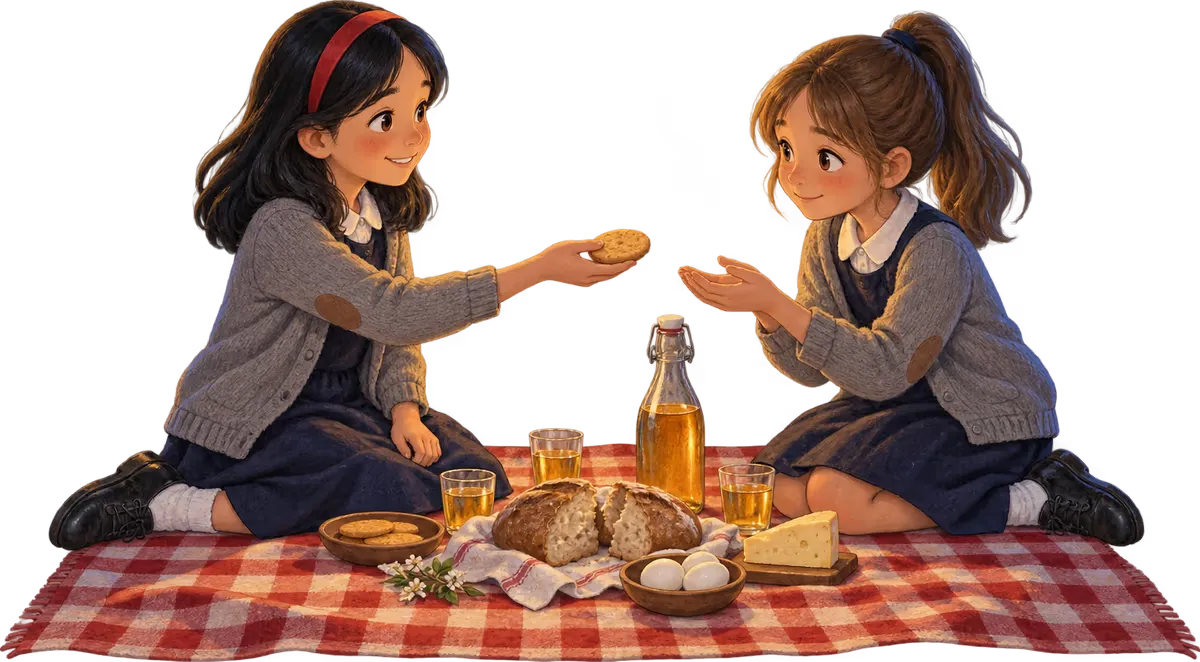
Nobody made a speech. Clarita simply handed her the last cookie.
That afternoon they played tag, ring games and hide-and-seek all over the park. Miss Claudia, sitting some distance away with the other teachers, watched six girls run hand in hand and had to take off her glasses to dry her eyes.
—Are you all right? —someone asked her.
—Very much so —she answered—. It’s just that sometimes you think you’re teaching them, and it turns out they’re the ones teaching you.
Epilogue
From that day in the park onward, the six of them were inseparable friends.
The nickname was never again heard in a mocking tone. On the contrary: when someone from another class tried to use it to tease them, Angélica was the first to leap to their defense.
—Yes, they’re the woodcutter girls —she said, with her head high—. And they’re my friends. Their father works harder than yours and mine put together.
That day the nickname stopped being a wound and became a name the three sisters wore with pride.
In December, when the school year ended, Marisol, Luz and Clara went up on stage to receive their academic excellence diplomas. From the front row, José clapped with those big rough hands that cut firewood, and Sonia cried without hiding it at all.
Behind them, Paula, Lorena and Angélica clapped louder than anyone.
The teachers and the parents talked about what had happened in that class for a long time afterward. They did not talk about the punishment or the scolding, because that was not what changed things.
They talked about a checkered blanket spread out on the grass, about homemade bread divided into equal parts, and about three girls from the mountain who had the courage to offer friendship to precisely those who deserved it least.
And that is how that school year ended: with all of them good friends, great friends, forever.
The Lesson
This story teaches us that:
-
Mockery says more about the one who mocks than about the one mocked: Marisol, Luz and Clara were called “the woodcutter girls” to humiliate them. But their father’s honest work was never a shame; the shame belonged to those who laughed at it.
-
A false accusation is not a joke: Making up that someone cheats or steals may feel like a game, but it leaves deep marks. Unjust words are heavy, and sometimes they weigh on a person for years.
-
Keeping sorrow quiet is not strength: The sisters kept everything to themselves so as not to worry their parents. Their intention was good, but they suffered alone for a long time. When something hurts you, tell someone who loves you.
-
Adults must truly look: Miss Claudia did not settle for the first version she heard. She observed, verified and acted. Many injustices end the day an adult decides to pay attention.
-
Forgiving is not pretending nothing happened: The sisters forgave immediately, and that was an enormous thing. But it was also right that the other girls faced the consequences of their actions, because facing them is part of learning.
-
Generosity disarms more than revenge does: The sisters could have returned the contempt they had received. Instead, they shared their bread. That gesture achieved in one lunchtime what no punishment had achieved all year.
-
True nobility has nothing to do with money: In this story, the poorest girls were the most generous. A person’s greatness is not measured by what they have, but by what they are able to give.
May the story of Marisol, Luz and Clara remind us that in every classroom there is someone having a hard time in silence. And that sometimes it is enough to walk over, ask “what’s wrong?” and share what you brought, to change another person’s entire year.
The End